

If you’re considering a healthcare career that involves hands-on patient care and supporting people in your community, a practical nursing program could be a path worth exploring.
Rockford Career College’s 14-month Practical Nursing diploma program combines hybrid learning, hands-on instruction, and supervised clinical experience to help students develop foundational nursing skills.
What Is a Practical Nursing Program?
A practical nursing program provides education that can help prepare students to pursue licensure as a licensed practical nurse (LPN). LPNs provide nursing care under the direction of authorized healthcare professionals, with responsibilities determined by state law and workplace policies.
Programs typically combine classroom learning, practical skills instruction, and supervised clinical experiences. After graduation, students must meet applicable state licensing requirements, including passing the NCLEX-PN, before practicing as LPNs.
What You’ll Learn in a Practical Nursing Program
Core Nursing Skills
Practical nursing education introduces foundational patient care skills, including how to:
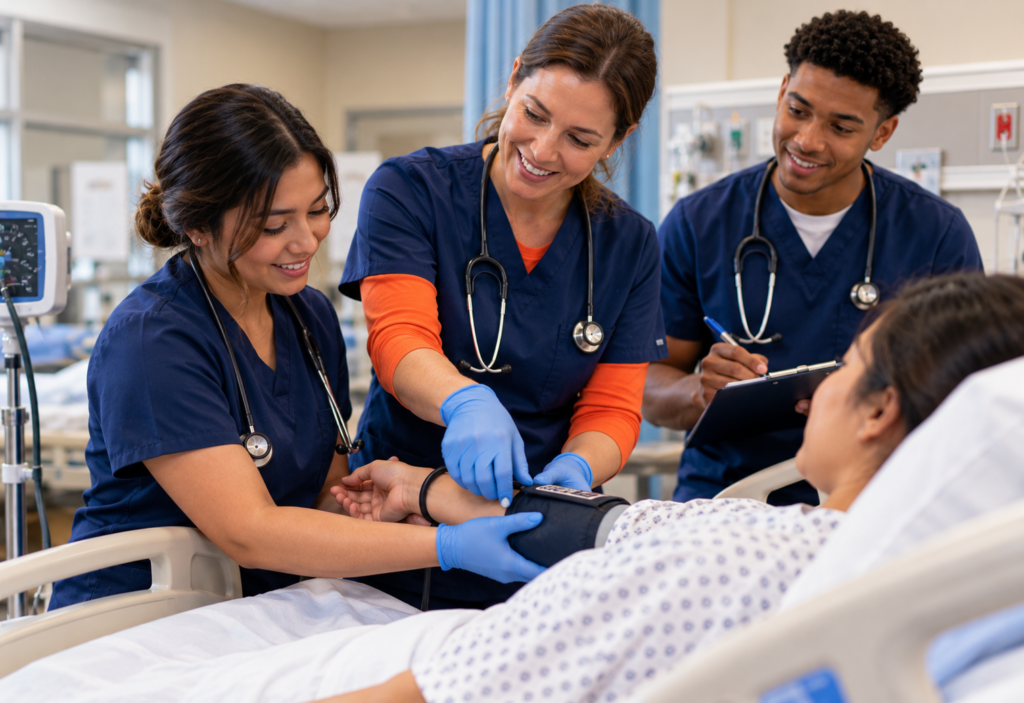
- Measure and record vital signs, including blood pressure, temperature, and pulse
- Assist patients with activities of daily living, as appropriate to the care setting
- Support patient hygiene, positioning, and comfort
- Apply patient safety and infection prevention practices
These foundational skills support safe, consistent patient care across a variety of healthcare settings.

Basic Medical Knowledge
Alongside hands-on skills, students study concepts that help explain how the body functions and how nursing care supports patient health. Topics may include:
- Anatomy and physiology
- Common health conditions and their effects on patient care
- Medical terminology
- Nutrition and its role in patient health
This knowledge helps connect clinical procedures with the reasons behind patient care decisions.
Medication and Treatment Basics
Medication administration and treatment procedures are important areas of practical nursing education. Depending on the curriculum, students may study:
- Principles of safe medication administration
- Medication calculations, dosage accuracy, and documentation
- Common nursing treatments and procedures within the practical nurse’s scope of practice
- Observing, documenting, and reporting patient responses
These topics emphasize accuracy, patient safety, and communication with the healthcare team.
Clinical (Hands-On) Training
Supervised clinical experience is an important component of practical nursing education.
Students complete supervised clinical experiences in approved healthcare settings. Specific placement locations depend on the program’s clinical arrangements.
These experiences allow students to apply appropriate nursing skills under supervision and connect classroom learning with patient care.
Communication and Patient Care
Healthcare isn’t just about clinical skills; it’s also about working with people.
Practical nursing education also emphasizes communicating with patients and families, collaborating with healthcare teams, and responding professionally in challenging situations.
Communication, empathy, and professionalism complement technical nursing skills.
Preparing for the Workplace
Beyond nursing coursework, Rockford Career College’s career services can provide support as students prepare to explore employment opportunities.
Services may include:
- Guidance on workplace expectations and professional preparation
- Resume development and interview preparation
- Job fairs or campus events that may provide opportunities to connect with employers
These resources can support your job search, although employment is not guaranteed.
Who Is This Program For?
Practical nursing may appeal to people who:
- Want to explore a direct educational pathway toward nursing licensure
- Prefer hands-on learning
- Are interested in a program that combines different learning formats
- Are interested in providing patient care and working with healthcare teams
Students balancing school with work or family responsibilities should review the program’s classroom, lab, and clinical scheduling requirements before enrolling.
Explore Practical Nursing at Rockford Career College
A practical nursing program combines foundational medical knowledge, hands-on patient care, clinical experience, and professional communication to help students prepare for the responsibilities of nursing.
If you’re interested in learning more, explore Rockford Career College’s Practical Nursing diploma program to review the curriculum, program requirements, and next steps toward pursuing your nursing education.
