

Learn about sonography careers, the skills diagnostic medical sonographers use, career outlook, and how training can help students prepare for this healthcare field.
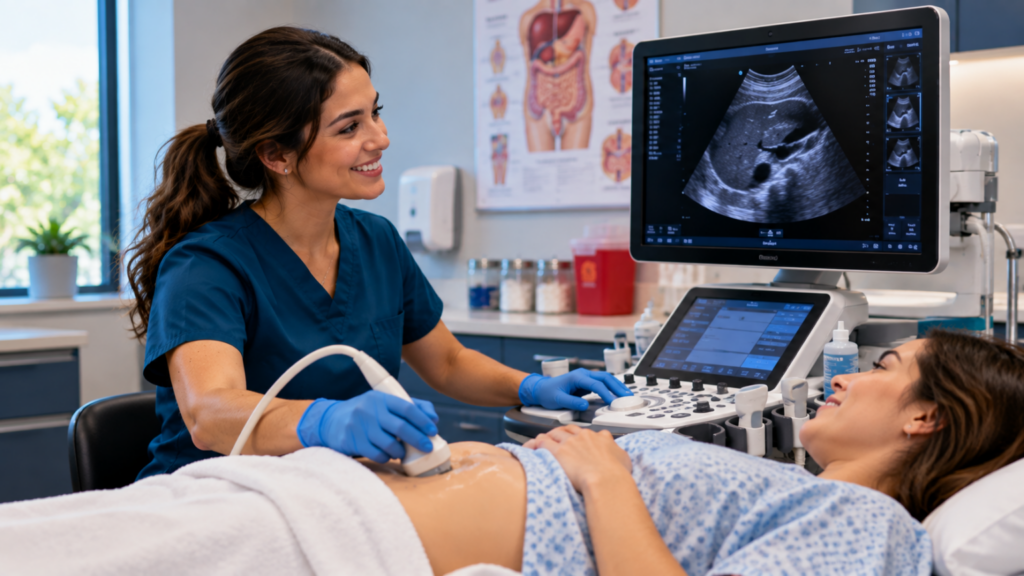
Sonography combines medical imaging technology with direct patient interaction. Diagnostic medical sonographers use specialized equipment that produces images of structures inside the body using high-frequency sound waves. These images provide physicians with information they can use when assessing and diagnosing medical conditions.
For students considering sonography careers, understanding the profession involves more than learning how to operate ultrasound equipment. Sonographers also rely on critical thinking, attention to detail, communication, and patient-care skills.
Skills for Sonography Careers
Sonography students develop a combination of technical and interpersonal skills that can support their work in clinical environments.
- Critical Thinking and Problem-Solving: Sonographers capture diagnostic images, evaluate image quality, and recognize findings that may require additional images for physician review.
- Attention to Detail: Obtaining clear, complete images requires careful positioning, measurements, and observation throughout an examination.
- Compassion and Communication: Sonographers interact directly with patients who may have questions or feel anxious about an examination. Clear communication and a professional, considerate approach are important parts of patient care.
- Adaptability: Sonography technology and clinical practices continue to evolve. Professionals may need to learn new equipment, procedures, and protocols throughout their careers.
- Professionalism: Following clinical procedures, protecting patient information, and communicating effectively with other healthcare professionals are important responsibilities in medical imaging environments.
Hands-On Sonography Training
Rockford Career College’s Associate of Applied Science in Diagnostic Medical Sonography program combines classroom instruction, laboratory training, and clinical experience.
During laboratory training, students have opportunities to develop scanning techniques and become familiar with ultrasound equipment. Clinical externships provide additional opportunities to apply knowledge and develop skills in off-campus clinical settings.
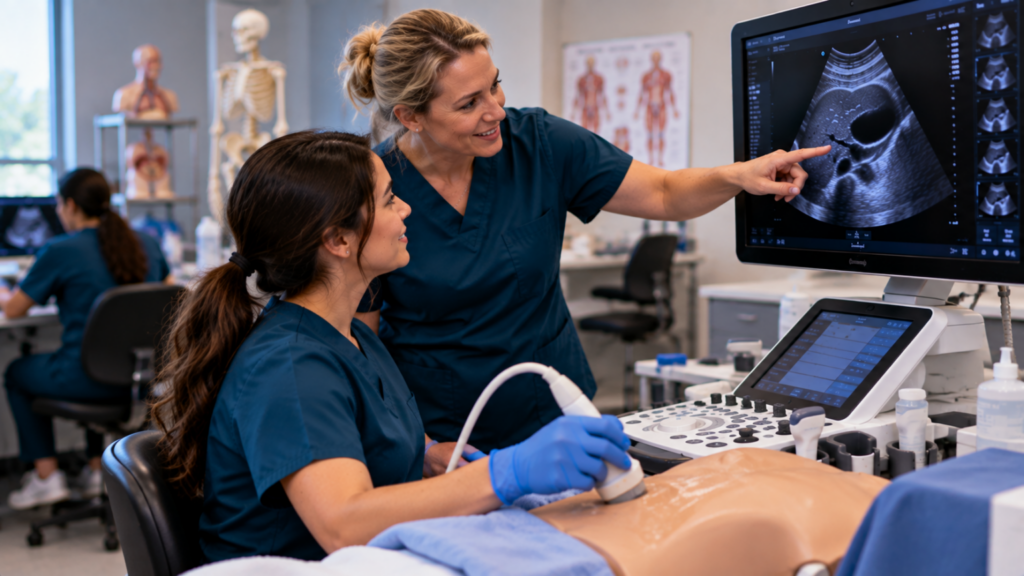
Program coursework covers subjects such as ultrasound physics, abdominal sonography, vascular sonography, superficial structures, gynecological sonography, and obstetrical sonography. Students also complete registry review coursework as part of the curriculum.
Preparing for Sonography Career Opportunities
Professional preparation can continue beyond completing a sonography program. Depending on the employer, role, and location, professional credentials may be required or preferred.
Students preparing for the field can review credential requirements relevant to their intended specialty and location. Professional organizations such as the American Registry for Diagnostic Medical Sonography (ARDMS) offer credentials in areas of diagnostic medical sonography.
Eligibility depends on the credential’s education, clinical experience, and examination requirements; completing a program does not automatically award a professional credential.
Clinical experiences can also provide opportunities to develop professional relationships and learn about workplace expectations. Continuing education and professional development can help sonographers remain informed about changes in technology, clinical practices, and healthcare regulations.
Sonography Career Outlook
According to the U.S. Bureau of Labor Statistics, employment of diagnostic medical sonographers is projected to grow nationally by 14% from 2025 to 2035, with about 6,000 openings projected each year on average.
The national median annual wage for diagnostic medical sonographers was $96,590 in May 2025. Actual employment and salary outcomes vary by location, experience, employer, credentials, and individual circumstances.
Sonographers may work in settings such as hospitals, physicians’ offices, medical and diagnostic laboratories, and outpatient care centers. Opportunities can also vary according to specialty and geographic location.
Continuing Education and Sonography Technology
Medical imaging technology continues to develop, making ongoing learning an important part of many healthcare careers. Sonographers may participate in continuing education, professional conferences, or additional training to maintain credentials and expand their knowledge.
Emerging technologies are also influencing medical imaging. Point-of-care ultrasound allows trained healthcare professionals to use ultrasound at or near the location of patient care. Artificial intelligence is also being studied and incorporated into some medical imaging tools to assist with tasks such as image acquisition.
Staying informed about changes in equipment, professional standards, and clinical practices can support continued professional development throughout a sonographer’s career.
Explore Diagnostic Medical Sonography at Rockford Career College
Sonography may appeal to students interested in healthcare technology, medical imaging, and direct patient care. Structured education can help students develop foundational knowledge and practice the technical skills associated with diagnostic medical sonography.
Explore Rockford Career College’s Diagnostic Medical Sonography program to learn more about the curriculum and training experience.
Ready to learn more about sonography training in Rockford? Contact Rockford Career College to speak with admissions about program requirements and the enrollment process.
