
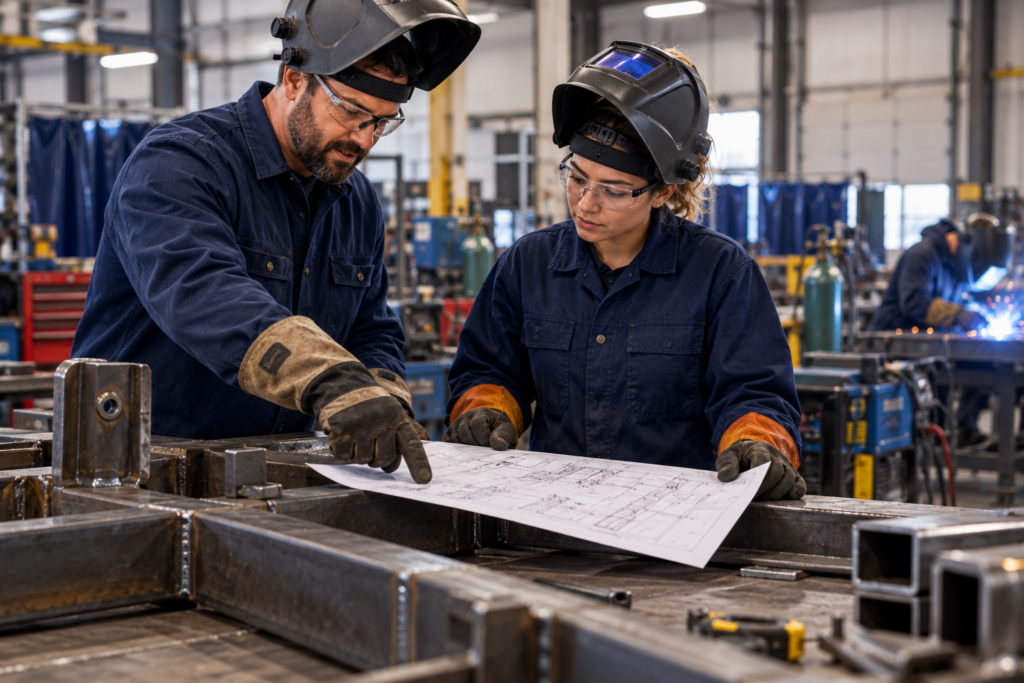
Welding training can provide foundational skills relevant to entry-level welding and welding-related work in industries such as manufacturing, construction, and fabrication. Welding skills are used in settings such as manufacturing facilities, fabrication shops, construction projects, and repair operations.
Below are examples of entry-level welding work and other roles that may become possibilities with additional experience, training, or credentials.
Entry-Level Welding Career Options
RCC’s Welding Diploma is designed to develop foundational skills relevant to entry-level welding and welding-related employment. Entry-level job titles and responsibilities can vary by employer and industry.
Opportunities may include welder, production or fabrication-related welding work, and other welding-related positions based on employer requirements. These roles can involve joining metal components, reading project specifications, preparing materials, and using welding equipment and tools.
Welding Roles That May Require Additional Experience or Training
With additional experience, training, education, or credentials, some welders may explore more specialized responsibilities.
- Manufacturing and construction welding: Welders may work in manufacturing, construction, repair, and other settings. Work environments and requirements vary by employer and project.
- Welding technician: These roles may involve interpreting technical information, supporting welding processes, equipment setup, or troubleshooting. Requirements vary by employer.
- Welding inspector: Welding inspection can be a later-career option for individuals who meet applicable experience, education, and certification requirements.
- Shipbuilding and repair: Specialized welding work may be found in settings such as shipbuilding and repair. Employer requirements and working conditions vary.
- Pipe and other specialized welding work: These positions may require additional process qualifications, certifications, or employer-specific testing.
- Welding instructor: Experienced welders may later explore instructional roles depending on the employer’s education, experience, and credential requirements.
Welding Career Outlook and Work Environments
According to the U.S. Bureau of Labor Statistics, the median annual wage for welders, cutters, solderers, and brazers was $53,750 in May 2025. Employment is projected to grow 2% from 2025 to 2035, with about 40,300 openings projected each year, on average, over the decade.
Actual wages and employment opportunities vary by experience, employer, industry, location, and individual circumstances.
Welders work in industries and settings that include manufacturing, specialty trade contracting, and repair and maintenance. Work environments and responsibilities can differ considerably depending on the employer and type of welding being performed.
How RCC’s Welding Program Builds Foundational Skills
RCC’s Welding Diploma includes hands-on lab training designed to develop welding skills through practice and applied projects. The program is designed for completion in 10 months and consists of 64 quarter credit hours.
Training includes welding methods such as Stick, MIG, TIG, and Flux-Core, along with blueprint reading, welding symbols, and related welding fundamentals. Students practice welding skills through lab activities, projects, and skill-development exercises.
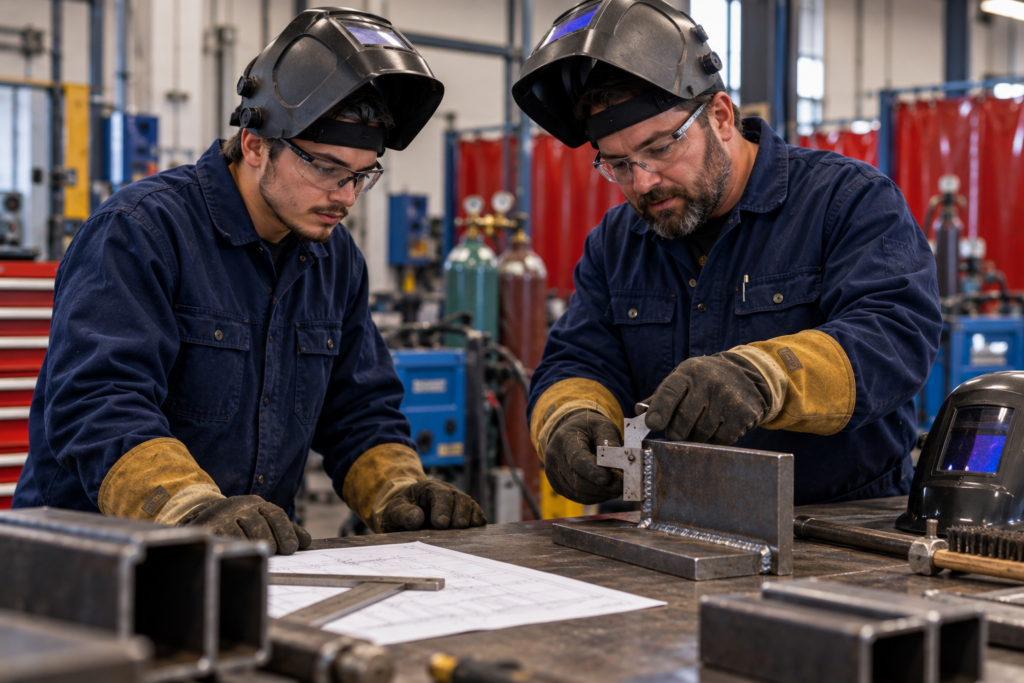
This combination of technical instruction and hands-on practice is designed to build foundational skills relevant to entry-level welding and welding-related work.
Career Services and Student Support
RCC Career Services offers resources designed to support students and graduates with career preparation and job-search activities. Career Services support may include:
- One-on-one career advising
- Resume and cover letter workshops
- Interview and job-search preparation
- Career-readiness resources
- Job fairs and on-campus events
Career Services can provide assistance during the transition from training to a job search, but employment outcomes vary based on factors such as employer requirements, qualifications, experience, and local opportunities.
Explore the Next Step
Welding can involve work across manufacturing, construction, fabrication, repair, and other industries. Entry-level training can provide a foundation, while some specialized positions may require additional experience, education, certifications, or employer-specific qualifications.
If welding training aligns with your goals, explore RCC’s Welding Diploma to learn more about the curriculum and program requirements. You can also request information from Rockford Career College to learn more about the program.
