

If you’re considering electrical training, you may be wondering how your career options could develop over time. Electrical training can provide a foundation for entry-level work, while additional experience, apprenticeship training, licensing, or credentials may be required for other electrical roles.
Career requirements vary by role, employer, and jurisdiction. RCC’s Electrical Technician Diploma focuses on foundational electrical knowledge and hands-on skills that can be relevant to work in residential, commercial, and industrial settings.
What Does Electrical Work Involve?
Electrical work can involve installing, maintaining, troubleshooting, or repairing electrical systems and equipment. Specific responsibilities depend on the position, employer, work environment, and applicable licensing requirements.
Electrical workers may encounter power systems, wiring, lighting, controls, and other electrical equipment. Some positions focus primarily on installation, while others may involve maintenance, troubleshooting, or repair.
Foundational Skills for Electrical Work
Foundational electrical training can include:
- AC/DC principles and circuit theory
- Electrical safety practices
- Blueprint reading and technical diagrams
- Wiring and electrical components
- Troubleshooting methods
- Electrical system installation and maintenance concepts
RCC combines classroom instruction with hands-on lab experience in areas such as wiring, troubleshooting, blueprint reading, and electrical safety.
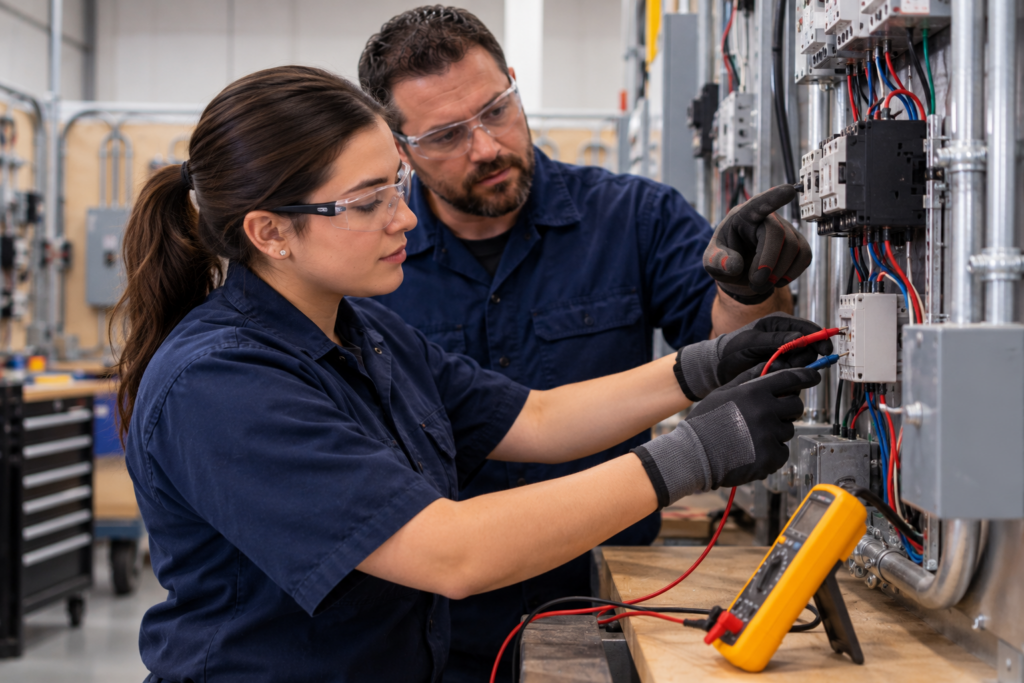
Electrical work can also be physically demanding and may involve standing, kneeling, working in confined spaces, handling tools, or working at heights, depending on the job.
Problem-solving is another important part of electrical work. It can involve diagnosing issues, interpreting technical information, and applying electrical principles to different situations.
Exploring Electrical Career Progression
Entry-level possibilities vary by employer and jurisdiction. RCC identifies career options including Inside Wiremen, Outside Linemen, Residential Lineman, Installer Technician, Renewable Energy Technician, and Engineering Technician. Individual positions may require additional qualifications, training, licensing, or experience.
Job duties, supervision, and training requirements depend on the position and employer. Completing an electrical technician diploma does not by itself satisfy every apprenticeship, licensing, or employer requirement for becoming an electrician.
Apprenticeship and Licensed Electrician Pathways
Most electricians learn their trade through an apprenticeship, although some begin by attending technical school. Apprenticeship length and licensing requirements vary by program and jurisdiction.
With additional training and experience, individuals may explore electrical work in residential, commercial, or industrial settings, subject to applicable employer and licensing requirements.
Experienced electrical workers may later pursue specialized, supervisory, management, or contractor responsibilities when they meet applicable experience, education, licensing, and employer requirements.
Requirements for advancement can vary considerably and may include apprenticeship training, work experience, continuing education, examinations, licensing, or specialized credentials.
Electrical Career Outlook
According to the U.S. Bureau of Labor Statistics, employment of electricians is projected to grow 9% from 2025 to 2035. About 72,700 openings for electricians are projected each year, on average, over the decade.
The median annual wage for electricians was $63,190 in May 2025. Employment and salary outcomes vary by location, experience, employer, qualifications, and individual circumstances.
These national figures provide useful context for the occupation, but they do not guarantee employment, advancement, or earnings for individual graduates.
Build Foundational Skills at RCC
RCC’s Electrical Technician Diploma is designed for completion in 10 months and consists of 64 quarter credit hours. The program is offered on-ground at the Rockford campus.
Students receive instruction and hands-on practice in electrical concepts and skills such as wiring, troubleshooting, blueprint reading, electrical safety, and system installation. This training is designed to build foundational knowledge relevant to electrical and electrical-related work.
Because licensing and apprenticeship requirements vary, students interested in becoming licensed electricians should also research the requirements that apply in the state or locality where they intend to work.
Explore Electrical Technician Training
Electrical career progression does not follow one universal path. Your options can depend on the type of electrical work you pursue, your experience, additional training, licensing requirements, employer expectations, and location.
If electrical training aligns with your goals, explore RCC’s Electrical Technician Diploma to learn more about its curriculum, hands-on training, and program requirements. You can also request information from Rockford Career College to learn more about the program.
