

Explore how medical assistants may handle clinical and administrative responsibilities and how training can help students develop skills for both sides of the role.
A medical assistant might take a patient’s vital signs during one part of the day and update an electronic health record or schedule an appointment during another. This combination of patient-facing and administrative responsibilities is one feature of the medical assisting occupation.
Specific medical assistant duties vary by employer, specialty, healthcare setting, location, and applicable state requirements. Some medical assistants focus primarily on clinical or administrative responsibilities, while others perform a combination of both.
Two Sides of Medical Assisting: Clinical and Administrative
Medical assistants support healthcare practices through a range of clinical and administrative tasks. Understanding these two areas can help prospective students get a clearer picture of what the occupation may involve.
Clinical Medical Assistant Duties
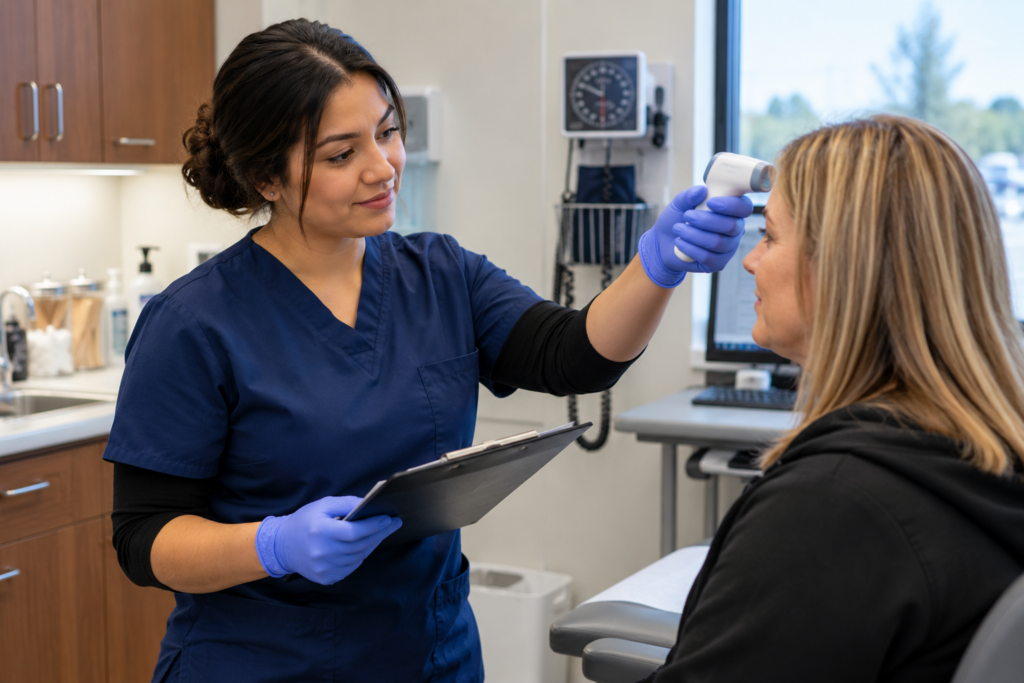
Clinical responsibilities typically involve direct interaction with patients and support for healthcare providers. Depending on the setting and applicable state requirements, duties may include:
- Taking and recording vital signs.
- Recording patient medical histories.
- Helping physicians with patient examinations.
- Collecting and preparing specimens for laboratory testing.
- Preparing patients and examination rooms for procedures.
The specific clinical tasks a medical assistant is permitted to perform can vary by state and employer.
Administrative Medical Assistant Duties
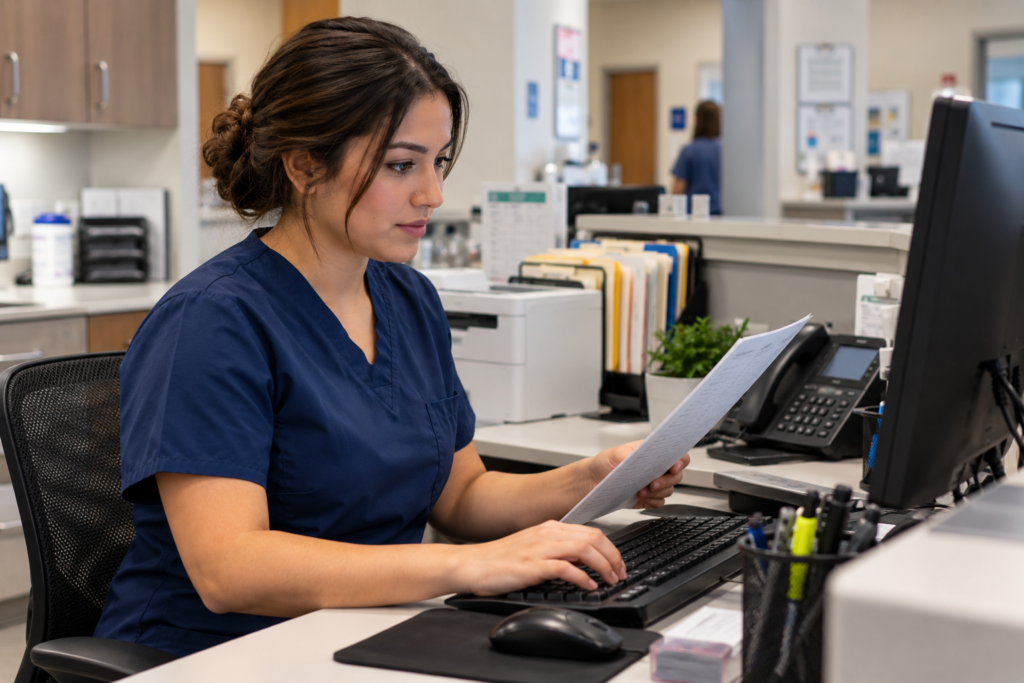
Medical assistants may also help with the administrative work involved in operating a healthcare practice. Responsibilities may include:
- Scheduling patient appointments.
- Entering and updating patient information.
- Maintaining medical records.
- Assisting with billing and other medical office functions.
- Communicating with patients about appointments and office procedures.
Some positions emphasize one side of medical assisting more than the other, while others involve both types of responsibilities.
Where Medical Assistants Work
Medical assistants work in a variety of healthcare environments. Physicians’ offices employ the largest share of medical assistants, but they may also work in hospitals, outpatient care centers, clinics, and other healthcare facilities.
The workplace can influence a medical assistant’s day-to-day responsibilities. Duties in a primary care office, for example, may differ from those performed in a specialty practice or outpatient facility.
How RCC Builds Clinical and Administrative Skills
Rockford Career College offers a Medical Assistant Diploma designed to be completed in 10 months. The 60-quarter-credit program uses a hybrid format that includes on-campus and online learning along with an externship.
RCC’s curriculum addresses both clinical and administrative aspects of medical assisting. Students have opportunities to learn about areas such as:
- EKGs, blood draws, and vital signs.
- Patient examinations and clinical procedures.
- Medical office administration.
- Scheduling and billing.
- Electronic health records.
- Anatomy and physiology.
- Medical terminology.
Students also complete a supervised externship, providing an opportunity to apply program learning in a healthcare environment.
RCC’s Medical Assistant program is formally recognized by American Medical Technologists (AMT). Program completers are eligible to sit for the appropriate AMT examination. Eligibility to take an examination does not guarantee certification.
Medical Assistant Career Outlook
The U.S. Bureau of Labor Statistics projects employment of medical assistants to grow 13% from 2025 to 2035, with approximately 109,700 openings per year on average over the decade.
The BLS reported a national median annual wage of $45,690 in May 2025 for medical assistants.
Employment projections describe the occupation overall and do not guarantee employment for individual graduates. Employment and salary outcomes vary by location, experience, employer, credentials, and individual circumstances.
Explore Medical Assistant Training at RCC
For students interested in a healthcare occupation that may involve both patient interaction and administrative responsibilities, learning about medical assisting can be a useful next step.
Explore Rockford Career College’s Medical Assistant Diploma to learn more about the curriculum, hybrid format, externship, and admissions process and determine whether the program aligns with your educational goals.
