

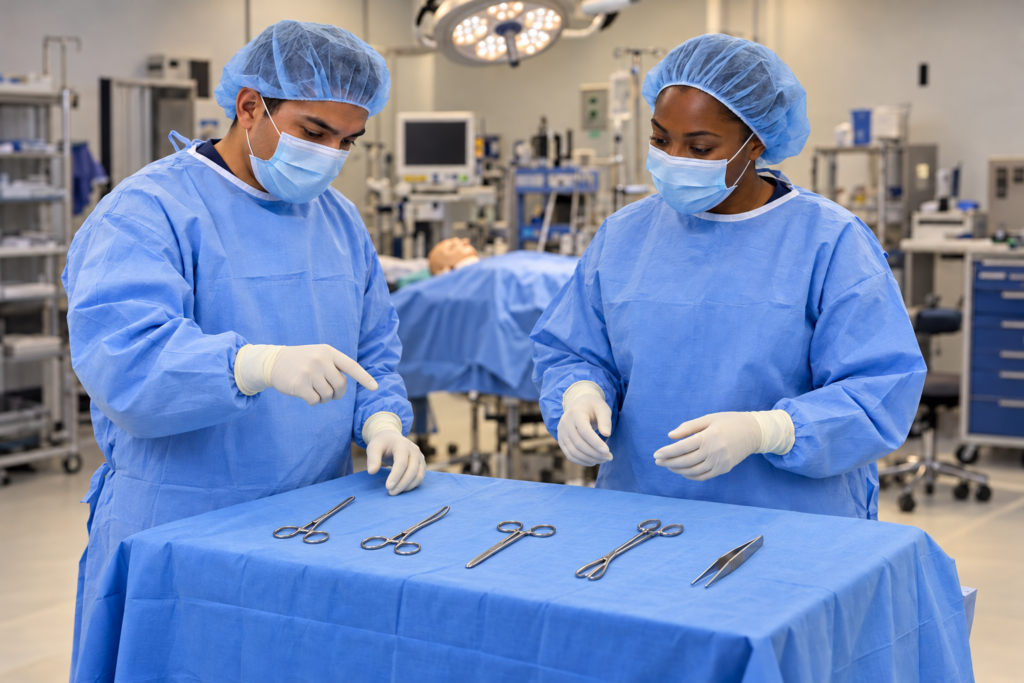
A surgical tech plays a key role in the operating room, supporting surgeons, nurses, and patients before, during, and after procedures. Exploring surgical tech specialties can help you understand how some technologists develop focused experience through workplace assignments and additional training.
If you are exploring how to become a surgical tech, understanding specialties can help you plan your goals. A surgical technology program like the one offered at Rockford Career College can help you build a foundation in surgical procedures, sterile technique, and operating room teamwork.
Why Surgical Tech Specialization Matters
A surgical tech may work across many types of procedures, but over time, some develop a focus based on their interests, strengths, and workplace opportunities.
Specializing may allow you to:
- Build knowledge of specialty-specific instruments, procedures, and surgical team needs.
- Work with specialized surgical teams.
- Build confidence in a focused environment.
- Explore different responsibilities in the operating room.
- Pursue relevant continuing education and employer-provided training.
Familiarity with a specialty’s instruments and workflow can help surgical techs anticipate the surgical team’s needs.
Surgical Tech Specialties to Explore
There are several surgical specialties where a trained surgical tech may work. Each area requires attention to detail, communication skills, and knowledge of surgical instruments and procedures.
Cardiovascular Surgery
Cardiovascular surgery focuses on the heart and blood vessels. Surgical techs in this area prepare specialized instruments and maintain sterile environments during complex procedures.
This specialty involves careful preparation and coordination with surgeons and nurses.
Orthopedic Surgery
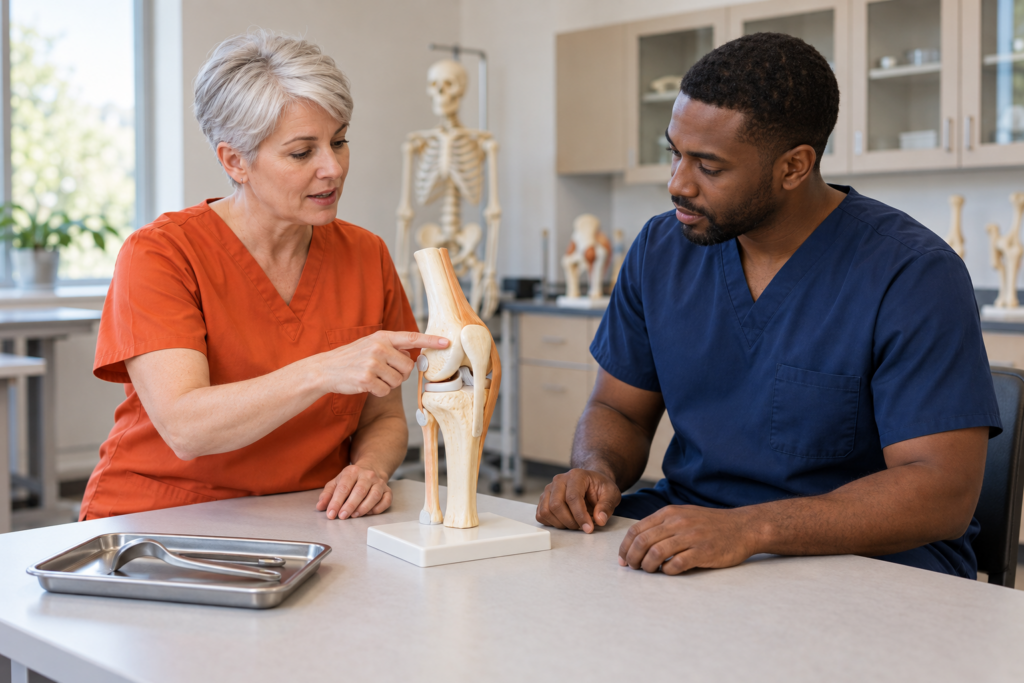
Orthopedic surgery includes procedures involving bones, joints, ligaments, and muscles. Surgical techs may assist with joint replacements, fracture repairs, and sports injury procedures.
Students interested in hands-on work and surgical instruments may find this specialty appealing.
Neurosurgery
Neurosurgery focuses on the brain, spine, and nervous system. Surgical techs working in this field help organize delicate instruments and maintain precise sterile procedures.
Because these surgeries can be detailed and lengthy, strong focus and preparation are important.
Pediatric Surgery
Pediatric surgery involves treating infants and children. Surgical techs in this specialty work closely with surgical teams trained to care for younger patients.
This area may require patience, communication skills, and careful attention to safety practices.
Obstetrics and Gynecology Surgery
OB-GYN surgery includes procedures related to women’s health, including cesarean sections and reproductive surgeries. Surgical techs support surgeons by preparing instruments and assisting with operating room organization.
Steps to Build a Specialized Surgical Tech Career
A surgical tech career often begins with strong training and consistent hands-on practice. Focused specialty experience can develop through clinical exposure, employer training, continuing education, and repeated work with a surgical team.
Complete a Surgical Technology Program
A quality surgical technology program introduces students to anatomy, sterile techniques, surgical procedures, patient care, and operating room safety.
Programs may include:
- Classroom instruction.
- Laboratory training.
- Clinical experience.
- Exposure to different surgical procedures.
Understand CST Certification Requirements
The Certified Surgical Technologist (CST) credential is awarded by the National Board of Surgical Technology and Surgical Assisting (NBSTSA). Candidates must meet its eligibility requirements and pass the examination.
Review current requirements directly with NBSTSA and confirm your program’s eligibility before enrolling.
Gain Clinical Experience
Hands-on clinical training helps students apply classroom knowledge in real healthcare settings. During externships or entry-level positions, surgical techs can observe different specialties and identify areas of interest.
Experience in operating rooms may also help professionals develop communication and teamwork skills.
Consider Surgical First Assisting as a Separate Career Step
Some surgical techs later pursue additional education or training to work as a surgical first assistant. This role may involve expanded responsibilities during surgical procedures under the supervision of surgeons.
Surgical first assisting is a distinct role with additional education, credentialing, and employer or state requirements. Experience in a surgical specialty does not automatically qualify a surgical tech to become a first assistant.
How Rockford Career College Supports Future Surgical Techs
Rockford Career College’s Surgical Technology Associate Degree program offers career-focused training leading to an Associate of Applied Science degree.
Students study surgical instrumentation, sterile technique, anatomy, patient safety, and surgical procedures through classroom instruction, lab simulations, and supervised clinical externships.
“Rockford Works” reflects RCC’s focus on practical training and career preparation. The program uses a blended format that combines online coursework with required on-campus training and clinical participation. Admissions can explain current class, lab, and clinical schedules.
Start Exploring Your Path in Surgical Technology
Choosing a specialty as a surgical tech can help you focus your goals and develop skills in areas that interest you most. Whether you are interested in orthopedic surgery, cardiovascular procedures, or pediatric care, education and clinical experience can help you move forward step by step.
Interested in surgical technology training in Rockford? Explore Rockford Career College’s Surgical Technology program, or contact admissions to discuss program requirements, scheduling, and your career interests.
