
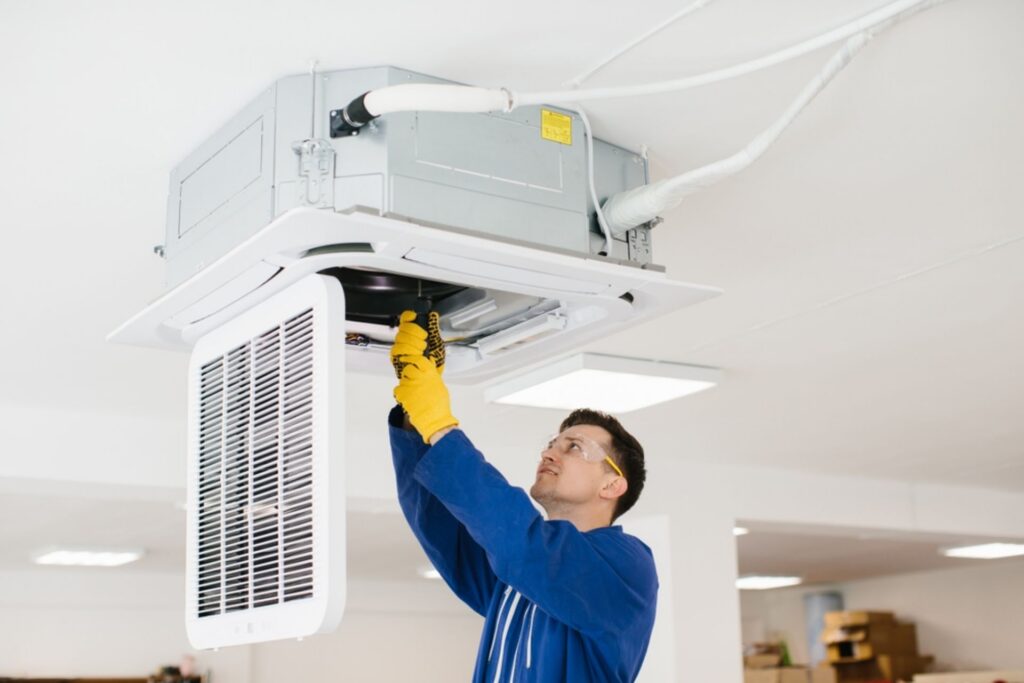
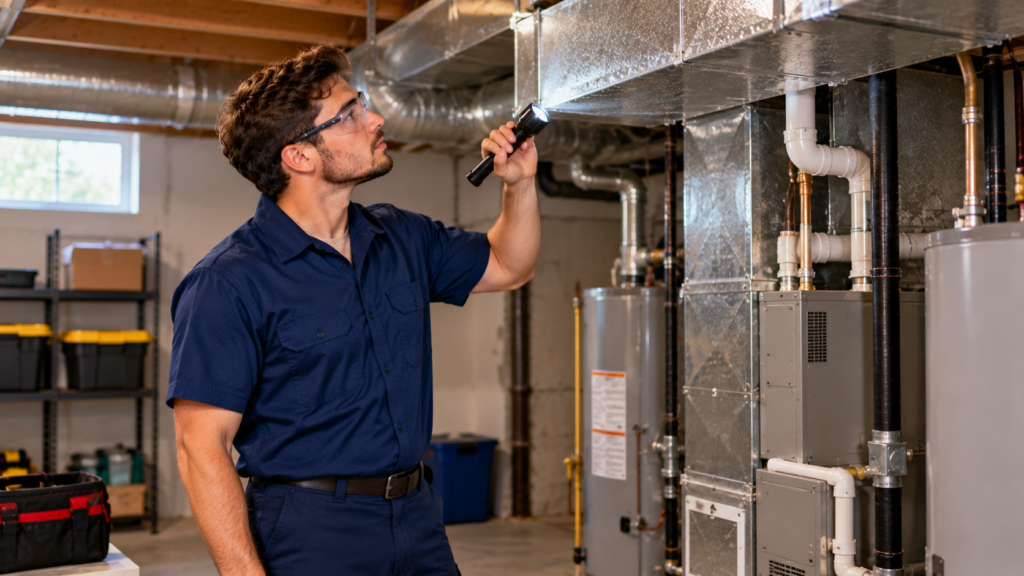
HVAC careers offer more variety than many people realize. From maintaining residential heating and cooling systems to servicing commercial refrigeration equipment, HVAC/R professionals work in environments that require different technical skills and responsibilities.
Heating, ventilation, air conditioning, and refrigeration (HVAC/R) is a broad field with several potential career paths. Understanding these specializations can help you explore which type of work best matches your interests and goals.
Where Can HVAC Technicians Specialize?
Residential HVAC Technician
Residential HVAC technicians install, maintain, and repair heating and cooling equipment in homes and apartments. Their work may involve furnaces, air conditioners, heat pumps, thermostats, and ventilation systems.
Technicians often travel between service locations, diagnose equipment problems, and explain repair or maintenance needs to homeowners. This specialization may appeal to individuals who enjoy hands-on troubleshooting and customer interaction.
Commercial HVAC Technician
Commercial HVAC technicians work with heating, cooling, and ventilation systems in offices, schools, hospitals, and other large buildings.
These systems may include rooftop units, commercial air-handling equipment, and automated temperature controls. Technicians perform preventive maintenance, troubleshoot mechanical problems, and help maintain reliable equipment operation.
Commercial HVAC may be a good fit for individuals interested in larger mechanical systems and complex building environments.
Refrigeration Technician
Refrigeration technicians service equipment that maintains controlled temperatures for food, products, and other temperature-sensitive materials.
Common equipment includes:
- Walk-in refrigerators and freezers.
- Grocery store refrigerated display cases.
- Restaurant refrigeration systems.
- Commercial ice machines.
Unlike comfort cooling, refrigeration systems often maintain specific storage temperatures. Technicians need to understand refrigeration principles, equipment performance, and safe servicing practices.
Technical Roles Within HVAC/R
HVAC/R professionals can also specialize in particular technical responsibilities rather than specific building types.
Installation and Service
Installation technicians set up new or replacement equipment, connect components, and test system operation according to manufacturer specifications and applicable safety requirements.
Service technicians focus on diagnosing problems, completing repairs, and performing routine maintenance. Both roles exist in residential, commercial, and refrigeration settings.
HVAC Controls and Automation
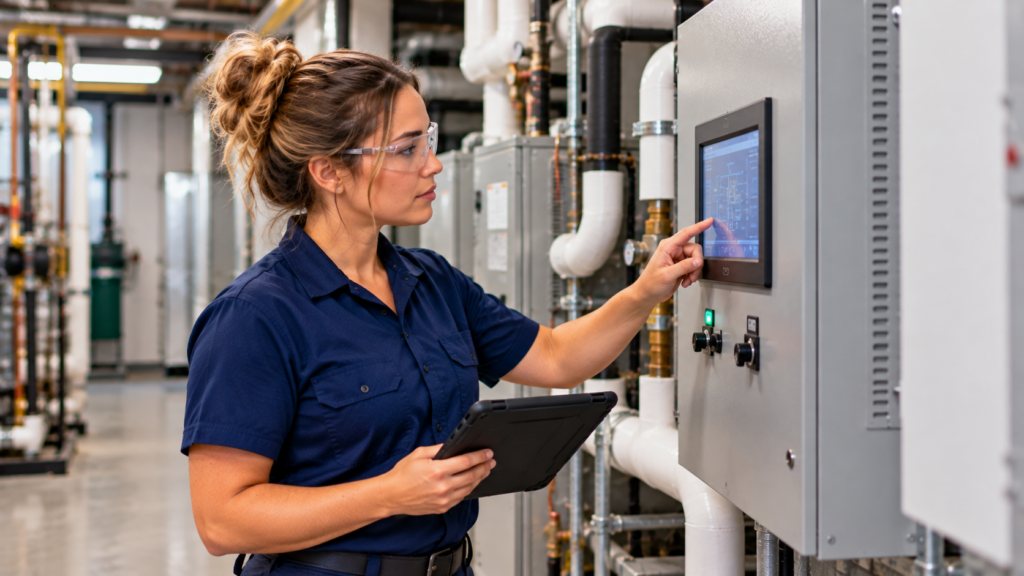
Modern HVAC systems use thermostats, sensors, electrical controls, and computerized technology to regulate equipment operation.
Some commercial buildings use building automation systems to coordinate heating, cooling, and ventilation. Technicians interested in electronics and systematic troubleshooting may pursue additional training in these systems.
Energy-Efficient HVAC Systems
Heat pumps, smart thermostats, and high-efficiency equipment create opportunities for technicians to develop expertise in system performance.
Energy efficiency is a technical focus that can complement several HVAC/R roles rather than one universally defined job title.
Which HVAC Career Path Fits Your Interests?
Different HVAC career paths emphasize different working environments and technical skills.
| Your interests | HVAC/R area to explore |
|---|---|
| Working with homeowners and troubleshooting equipment | Residential HVAC |
| Maintaining larger building systems | Commercial HVAC |
| Working with temperature-controlled storage equipment | Refrigeration |
| Assembling and testing mechanical equipment | Installation |
| Electronics and computerized controls | HVAC automation |
| Improving equipment performance | Energy-efficient HVAC |
These specializations are not necessarily separate career tracks. Technicians may expand their responsibilities as they gain experience and pursue additional training.
HVAC Training, Certification, and Career Outlook
HVAC/R education can introduce students to electrical principles, heating and cooling systems, refrigeration, equipment maintenance, and troubleshooting.
Technicians who perform covered refrigerant-handling activities generally need the appropriate EPA Section 608 certification. Other certifications or licensing requirements may depend on the work performed and location.
The U.S. Bureau of Labor Statistics provides national wage and employment outlook information for heating, air conditioning, and refrigeration mechanics and installers. Actual opportunities and earnings vary by employer, experience, location, and specialization.
Explore HVAC/R Training at Rockford Career College
Rockford Career College offers an HVAC/R Diploma program focused on developing foundational knowledge and practical skills for entry-level opportunities in the field.
Students can explore heating, cooling, refrigeration, installation, maintenance, and troubleshooting concepts as they prepare to pursue their professional goals.
Whether you’re interested in residential service, commercial equipment, or refrigeration, understanding your options is an important first step.
Explore Rockford Career College’s HVAC/R Diploma program to learn more about the training and admissions process.
