

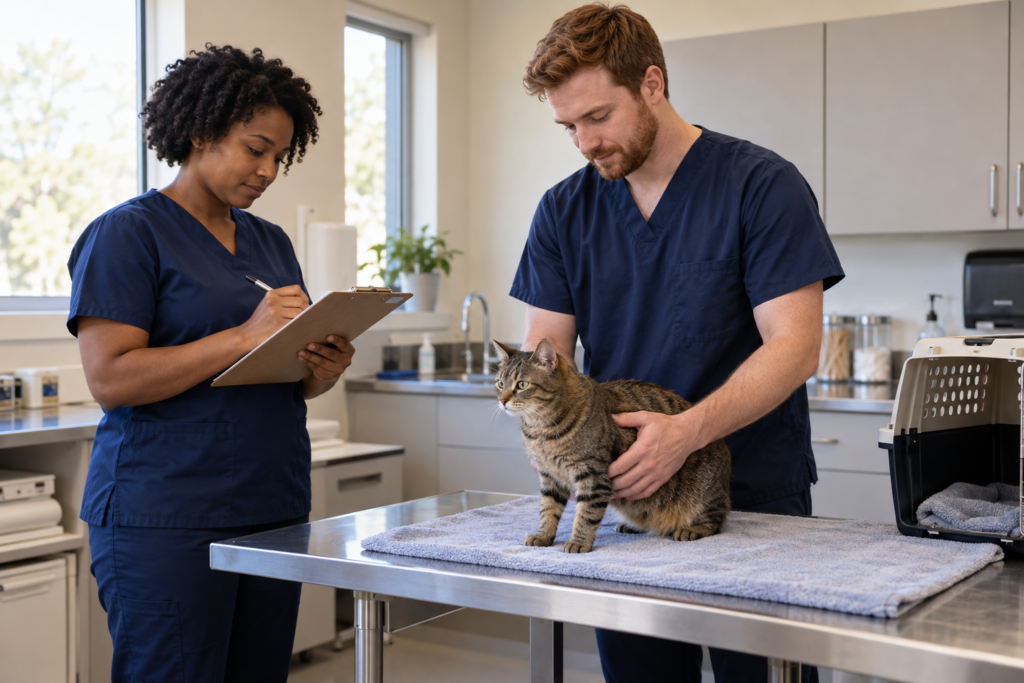
When you picture a veterinary technician at work, you may imagine a traditional veterinary clinic. But veterinary technicians may also support animal care in research facilities, shelters, mobile veterinary services, and other specialized settings.
Whether assisting with specialized surgery, managing public health initiatives, or caring for animals in dynamic mobile units, animal care professionals work in varied environments daily. If you love working with animals, learning about these specialized pathways can help you plan your educational journey.
At Rockford Career College, career-focused education connects classroom learning with practical training. For students interested in animal healthcare, exploring different work settings can help connect personal interests with educational goals.
Exploring Alternative Career Paths for Veterinary Technicians
The U.S. Bureau of Labor Statistics projects employment of veterinary technologists and technicians to grow 9% from 2025 to 2035. This national projection does not guarantee individual employment outcomes.
Veterinary nursing and laboratory skills may be useful across several animal care settings. Requirements vary by employer and role.
Alternative career settings where trained professionals apply their skills include:
- Mobile Veterinary Services: Mobile practitioners bring diagnostic equipment and routine care directly to clients’ homes or farms. Veterinary technicians support veterinarians during examinations, treatments, and preventive care.
- Research and Diagnostic Laboratories: Academic, government, and pharmaceutical laboratories employ technicians to oversee animal welfare, monitor health protocols, and assist with scientific studies.
- Wildlife Rehabilitation Centers and Zoos: Specialized facilities rely on trained staff to support wildlife conservation, manage exotic diets, and administer care to non-domestic species.
- Shelter Management and Rescue Operations: Animal shelters utilize technicians to support veterinarians during intake examinations, coordinate spay/neuter clinic support, and help carry out disease prevention programs.
Veterinary technician duties depend on applicable state requirements and veterinary supervision.
If you are curious about starting your journey in this practical field, explore our Veterinary Technician Associate Degree program to learn how classroom instruction and hands-on lab training connect to real-world applications.

Expanding Roles in Public Health, Agriculture, and Pet Industry Care
Federal and state government agencies employ professionals to inspect livestock facilities, manage disease control initiatives, and ensure ethical handling within food supply chains.
These related fields may draw on animal care knowledge, but they are distinct career paths. Some positions require additional education, training, credentials, or experience.
The broader pet care industry also offers complementary opportunities that benefit from foundational health knowledge:
- Livestock and Agricultural Inspection: Government roles within agricultural departments involve monitoring herd health, tracking livestock movements, and enforcing sanitation rules.
- Professional Canine Training and Behavior: Understanding animal physiology and behavior allows trainers to address behavioral challenges and train service animals effectively.
- Specialized Pet Grooming and Wellness Services: Groomers may notice changes in an animal’s skin, coat, ears, or movement and recommend veterinary evaluation.
- Corporate and Pharmaceutical Sales: Veterinary supply companies employ knowledgeable personnel to explain medical devices, nutrition plans, and pharmaceuticals to practicing veterinarians.
How Rockford Career College Prepares You for Animal Care Roles
At Rockford Career College, our Veterinary Technician program leads to an Associate of Applied Science degree. Its hybrid format combines online coursework with hands-on labs and supervised clinical externships, with required attendance on campus and at veterinary sites.
“Rockford Works” reflects our focus on practical skills and career preparation. Our curriculum covers animal nursing, laboratory procedures, anesthesia, diagnostic imaging, medical records, and client communication, helping students build a foundation for supporting veterinarians in different animal care settings.
Take the Next Step Toward Your Future in Animal Care
Traditional practice settings are only one part of the broader animal healthcare field. With dedicated training and a practical foundation, you can pursue animal care positions in laboratories, public health programs, mobile units, or shelter environments.
Interested in veterinary technician training in the Rockford area? Request more information about Rockford Career College’s program, including hybrid coursework, campus attendance, clinical training, and admissions requirements.
