
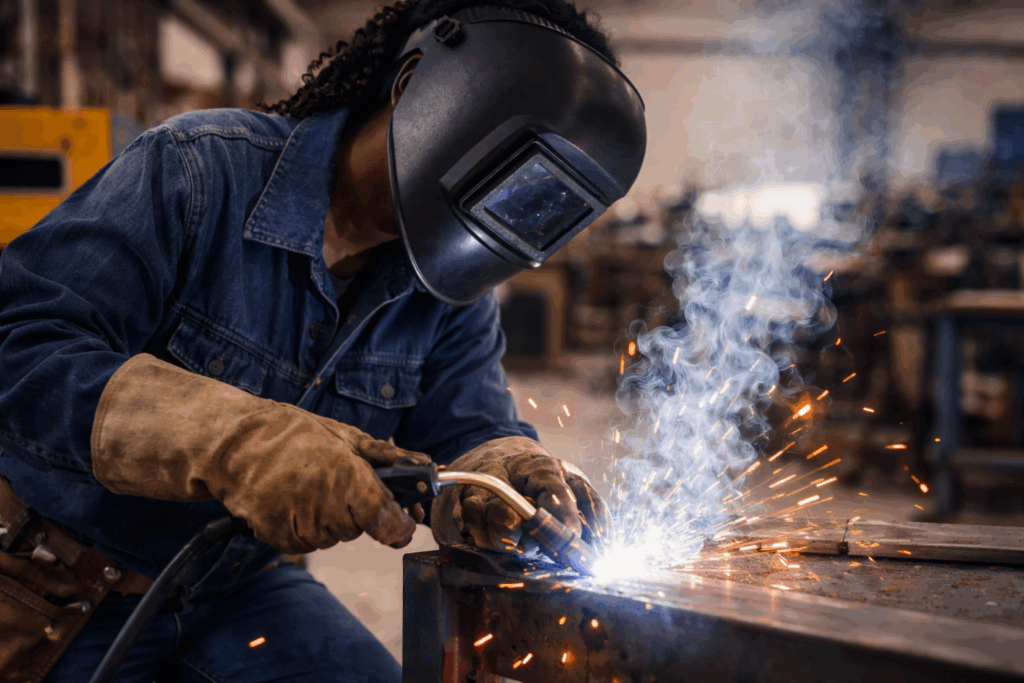
Welding is a skilled trade that plays an important role in construction, manufacturing, transportation, and other industries. By using heat to join pieces of metal, welders create and repair the components, equipment, and structures used in everyday life. For anyone considering welding as a field of study, understanding the work, techniques, and skills involved can be a useful place to start.
What is Welding?
Welding is the process of joining two pieces of metal by heating them to a molten state and fusing them. It’s precision work that requires technique, safety awareness, and steady hands. Welders help build and repair structures that communities depend on every day.
Types of Welding
Gas Metal Arc Welding (MIG)
MIG welding is a beginner-friendly approach, ideal for creating smooth, eye-catching welds. It involves using a wire electrode and shielding gas, making it suitable for automotive or small hobby projects.
Gas Tungsten Arc Welding (TIG)
TIG welding employs a tungsten electrode to create dazzling, clean welds. Whether you’re crafting art or tackling aerospace projects, TIG shines in complexity and detail.
Flux-Cored Arc Welding (FCAW)
FCAW eliminates the need for separate shielding gas, focusing on high-speed projects with thick metals. It’s commonly used in the construction and repair of heavy machinery.
Stick Welding (SMAW)
SMAW involves using a fixed-length electrode covered in flux that melts as it creates an arc with the base metal. It is effective in outdoor conditions, including windy environments, and can be used on rusty or dirty surfaces, making it ideal for repair work, construction sites, and field applications.
Is Welding Difficult?
The Learning Curve of Welding
Welding can seem intimidating at first glance. Yet, like many skills, it’s all about practice and persistence. Some methods are more beginner-friendly, while others require more precision and patience.
The environment, the specific method used, and your natural aptitude all play a role. For instance, welding in tight spaces or harsh conditions might require more skill and experience.
Career Paths for Welders
Welding skills can be applied across a variety of industries, including:
- Construction
- Manufacturing
- Automotive repair and customization
- Industrial maintenance
- Metal fabrication
What Makes Welding an Important Skilled Trade
Welding supports industries that keep the country running. According to this McKinsey Report, at least 70 percent of U.S.-manufactured products involve welding. Also, the American Welding Society projects that the economy will need over 300,000 welders by 2029, mainly due to industry growth.
From construction to transportation and energy, welders are critical for building, maintaining, and repairing vital infrastructure.
How RCC Helps Support Welding Students
However, the Diploma in Welding program is structured to help you grow your skills with guided instruction, repetition, and reassurance. The program equips you with hands-on skills like:
- Metal cutting and fabrication techniques
- Welding safety training and tool handling
- SMAW, GMAW, and GTAW welding processes
- Blueprint reading and measurement skills
- Shop practice and real-world project work
You also enjoy support from the student services to help you navigate the program, while the career services helps you with preparing your life after the program.
Final Thoughts
As you can see, welding is a critical skilled trade that supports industries and productivity. So next time you see sparks flying or hear the crackle of a welder at work, you’ll know it’s more than just metal being fused.
If you’re considering a career in welding, you may want to explore whether welding training is right for you. The 10-Month Welding Diploma at RCC equips you with a variety of welding techniques that prepare you for the real world. Our admissions team will be happy to answer your questions and walk you through the enrollment process. Contact us today to learn more about welding.
