
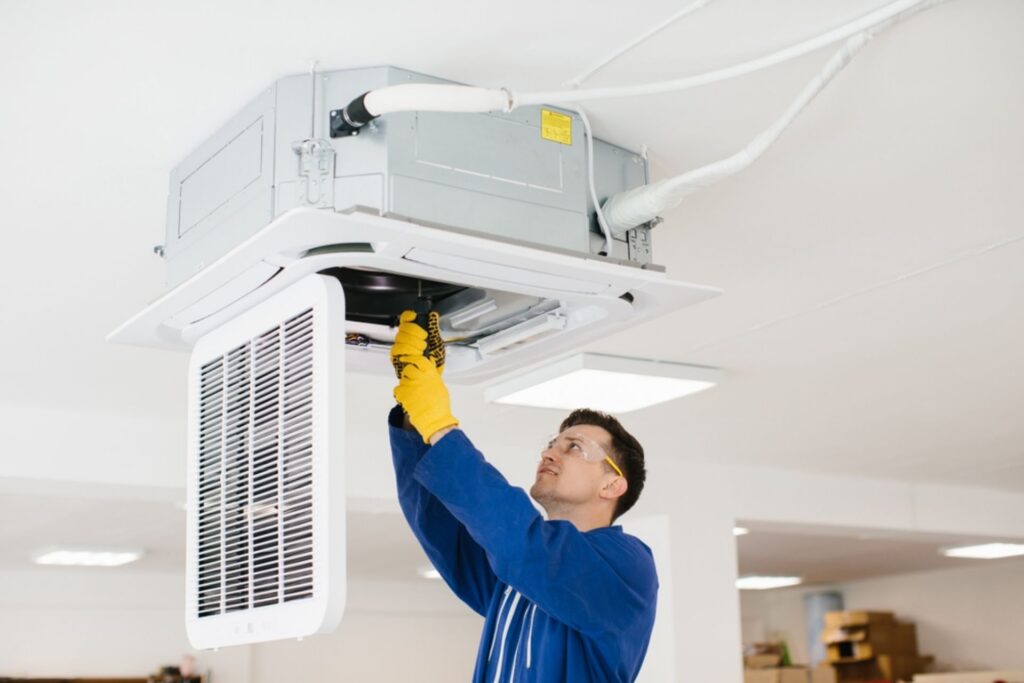

Ever wondered what it’s really like to work as an electrical technician?
The electrical technician work environment combines technical knowledge, problem-solving, and hands-on work with specialized tools and equipment.
From construction sites to manufacturing facilities, electrical technicians work in diverse settings where safety, precision, and teamwork are essential. Rockford Career College’s Electrical Technician Diploma helps students develop foundational knowledge and practical skills for pursuing opportunities in this field.
What Is an Electrical Technician?
An electrical technician installs, maintains, tests, and repairs electrical systems and equipment in residential, commercial, or industrial settings. Specific responsibilities depend on the employer, work environment, experience, and applicable licensing or supervision requirements.
Technicians may use voltage testers, multimeters, wire strippers, and other specialized tools to help identify problems and support safe, reliable electrical operations.
The Day-to-Day Environment of Electrical Technicians
An electrical technician’s workplace can change considerably depending on the assignment.
In residential settings, technicians may assist with wiring installations, lighting systems, and electrical troubleshooting. Commercial projects can involve installing conduit, maintaining equipment, or supporting building renovations. Industrial environments may require working around machinery, control systems, and production equipment.
Working conditions also vary. Some technicians spend much of their day indoors, while others work outdoors or at active construction sites. Tasks may involve standing for extended periods, climbing ladders, working in confined areas, or following schedules shaped by project deadlines and maintenance needs.
Typical work attire includes durable clothing, appropriate work boots, and protective equipment suited to the job.
Essential Tools and Equipment in an Electrical Technician’s Workplace
Electrical technicians rely on tools that support accurate installation, maintenance, and troubleshooting.
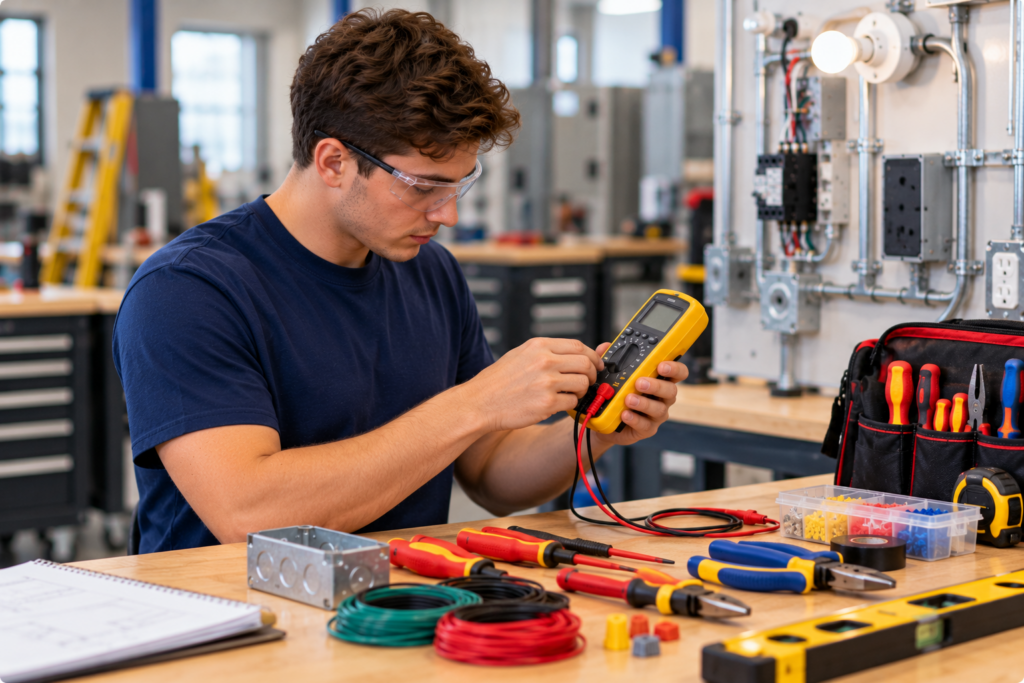
Common equipment includes:
- Multimeters: Measure electrical quantities such as voltage, resistance, and current when used correctly.
- Voltage testers: Help qualified workers evaluate electrical conditions using appropriate testing procedures.
- Insulated hand tools: Support certain electrical tasks when properly rated, maintained, and used.
- Wire strippers and lineman’s pliers: Assist with preparing and handling conductors.
- Tape measures and levels: Help ensure accurate measurements and installations.
Employers may supply specialized tools and equipment, while requirements for personally owned tools vary by workplace.
Understanding proper tool selection, inspection, and use is an important part of electrical training.
Safety Considerations in Electrical Workplaces
Safety is central to every electrical technician work environment. Electrical hazards can include shock, arc flash, burns, falls, and contact with energized equipment.
Employers determine appropriate precautions based on workplace conditions, applicable regulations, and task-specific hazards. Depending on the work, protective equipment may include safety glasses, protective footwear, appropriately rated insulating gloves, or arc-rated clothing.
Important safety practices include:
- De-energization: Follow established procedures to disconnect electrical equipment from its energy source before work whenever required.
- Lockout/tagout: Use applicable energy-control procedures to help prevent unexpected energization.
- Voltage verification: Qualified workers must verify the absence of voltage using appropriately rated equipment and required testing procedures.
- Overhead-line precautions: Follow applicable clearance requirements, which vary with voltage, equipment, and working conditions.
- Ground-fault protection: Ground Fault Circuit Interrupters (GFCIs) help reduce certain electrical shock hazards but do not eliminate every risk.
Training, supervision, and consistent adherence to workplace procedures are essential. Rockford Career College’s Electrical Technician Diploma introduces students to foundational electrical concepts and safety practices, while specific job duties may require additional training, experience, or credentials.
Working With Others: The Collaborative Nature of Electrical Work
Electrical technicians frequently coordinate with electricians, other tradespeople, supervisors, engineers, and project managers.
On construction projects, communication helps teams coordinate schedules, installations, and safety procedures. In manufacturing facilities, technicians may work with maintenance and production personnel to identify equipment problems and minimize disruptions.
Some assignments involve independent tasks, but clear communication and appropriate supervision remain important.
Being able to explain technical concerns, ask questions, and collaborate effectively can contribute to safer and more efficient work.
Preparing for an Electrical Technician Career
An electrical technician’s workplace offers variety, technical challenges, and opportunities to develop practical skills. Whether supporting installations, maintaining equipment, or troubleshooting systems, technicians contribute to the electrical infrastructure that homes and businesses depend on.
If you’re interested in hands-on technical work, Rockford Career College’s Electrical Technician Diploma program can help you explore the fundamentals of electrical systems, tools, and workplace safety.
Explore the Electrical Technician Diploma program to learn more about the curriculum, training opportunities, and how to get started.
