

Medical assistants play an important role in helping healthcare teams care for patients and keep medical offices organized. Whether preparing an examination room, recording vital signs, or updating patient information, their responsibilities require clinical knowledge, attention to detail, and strong communication skills.
For anyone considering a healthcare career in Rockford, Illinois, understanding the medical assistant skills employers value is a useful starting point. Employers look for individuals who can follow established procedures, work effectively with others, and help create a positive patient experience.
At Rockford Career College, our Medical Assistant diploma program helps students develop the clinical and administrative skills needed to prepare for entry-level opportunities in healthcare.
What Clinical Skills Do Medical Assistants Need?
Clinical medical assistants support healthcare professionals by helping patients prepare for appointments, collecting important information, and assisting with authorized procedures.
Although responsibilities vary by workplace, training, and applicable state requirements, several foundational skills are valuable across healthcare settings.
Patient Preparation and Vital Signs
Medical assistants are often responsible for welcoming patients into examination rooms, gathering information about their visit, and recording vital signs.
These measurements may include:
- Blood pressure
- Pulse
- Body temperature
- Respiratory rate
- Height and weight
Accurate measurements provide information that licensed healthcare professionals use when evaluating patients.
Medical assistants must also understand when to report unusual findings or patient concerns according to workplace procedures. Their role is to collect and communicate information accurately, rather than independently diagnose medical conditions.
Clinical Procedures and Equipment
Depending on their training, authorization, and employer requirements, medical assistants may assist with procedures such as electrocardiograms (EKGs), specimen collection, and other routine clinical tasks.
These responsibilities require an understanding of equipment, proper techniques, infection prevention, and patient safety.
For example, a medical assistant assisting with an EKG must understand how to prepare the patient, position electrodes correctly, and operate the equipment according to established procedures.
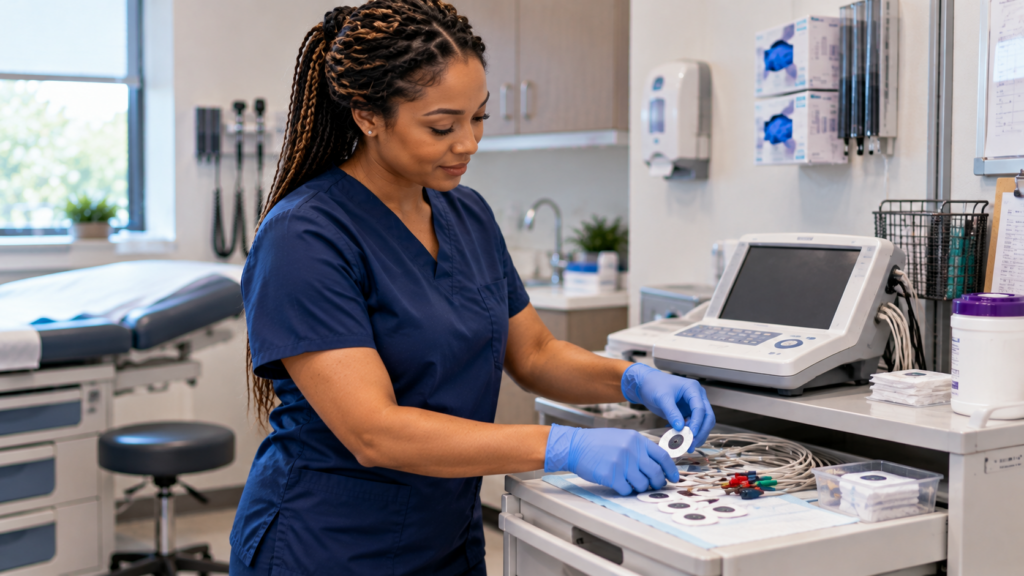
Similarly, specimen collection requires careful attention to patient identification, infection control, labeling, and handling requirements.
Examination Room Preparation and Infection Prevention
A well-prepared examination room helps healthcare professionals conduct patient visits efficiently.
Medical assistants may organize supplies, prepare equipment, disinfect approved surfaces, and ensure that necessary materials are available before an appointment.
Following infection prevention procedures, using personal protective equipment when appropriate, and maintaining a clean environment are important responsibilities.
These everyday tasks help support a safe, organized healthcare setting.
Administrative Medical Assistant Skills That Support Patient Care
Medical assistants may also perform administrative duties that help healthcare offices manage appointments, records, and communication.
Depending on the position, these responsibilities can include:
- Appointment scheduling: Coordinating patient visits and maintaining accurate schedules.
- Patient registration: Collecting and updating demographic and insurance information.
- Electronic Health Records (EHRs): Entering authorized information and maintaining accurate patient documentation.
- Office communication: Answering calls, directing patient questions, and sharing information with appropriate staff.
- Billing and insurance support: Assisting with administrative processes when included in the position’s responsibilities.
These tasks require organization, accuracy, and an understanding of how information moves through a healthcare office.
Protecting Patient Information
Medical assistants regularly encounter sensitive patient information.
The Health Insurance Portability and Accountability Act (HIPAA) establishes federal standards for protecting certain health information. Medical assistants must follow applicable privacy and security requirements and their employer’s policies.
This includes accessing records only when authorized, communicating patient information appropriately, and protecting both electronic and paper records.
Confidentiality is an essential part of maintaining patient trust and professional standards.
Professional Skills Healthcare Employers Value
Clinical and administrative knowledge are important, but employers also value medical assistants who communicate clearly, work well with others, and remain organized throughout the workday.
Communication and Patient Empathy
Patients may arrive at healthcare appointments feeling nervous, uncomfortable, or uncertain.
Medical assistants can help patients feel more at ease by listening carefully, explaining routine processes within their responsibilities, and treating everyone with patience and respect.
Clear communication also means recognizing when a question requires the attention of a licensed healthcare professional.
Teamwork and Attention to Detail
Medical assistants frequently work alongside physicians, nurses, office staff, and other healthcare professionals.
Effective teamwork involves sharing accurate information, following instructions, and communicating concerns promptly.
For example, recording a patient’s vital signs correctly and reporting an unexpected finding to the appropriate team member helps support informed clinical decisions.
Attention to detail also matters when documenting patient information, preparing supplies, and following workplace procedures.
Organization and Adaptability
Healthcare offices often manage multiple appointments, changing schedules, and unexpected patient needs.
Medical assistants may need to transition between preparing examination rooms, updating records, communicating with patients, and completing other assigned responsibilities.
Being organized and adaptable can help them respond to changing priorities without sacrificing accuracy or professionalism.
How Medical Assistant Skills Work Together During a Patient Visit
Clinical, administrative, and interpersonal skills are closely connected in everyday healthcare settings.
Consider a routine appointment at a physician’s office.
A medical assistant might begin by confirming the patient’s information and preparing an examination room. After welcoming the patient, the assistant may record vital signs, update authorized information in the EHR, and communicate relevant concerns to the healthcare provider.
Throughout the visit, the medical assistant must follow workplace procedures, protect patient privacy, and communicate respectfully.
This example demonstrates how several important skills work together:
- Clinical accuracy supports reliable patient information.
- Administrative organization helps maintain complete records and coordinated appointments.
- Communication helps patients and healthcare professionals exchange information.
- Professionalism supports respectful interactions and patient confidentiality.
Medical assistants do not independently diagnose conditions or make clinical triage decisions. Their responsibilities involve supporting the healthcare team within their training, authorization, and applicable requirements.
Why Medical Assistant Skills Matter in Today’s Healthcare Industry
Medical assistants work in a variety of healthcare environments, including physicians’ offices, outpatient clinics, hospitals, and other medical facilities.
According to the U.S. Bureau of Labor Statistics, employment of medical assistants is projected to grow 13% from 2025 to 2035, faster than the average for all occupations.
This national projection reflects expected employment trends and does not guarantee employment for individual graduates or predict hiring conditions in Rockford.
For prospective students, developing clinical, administrative, and professional skills can provide a foundation for pursuing entry-level medical assistant opportunities.
Develop Medical Assistant Skills at Rockford Career College
If you’re interested in a healthcare career that combines patient interaction with hands-on clinical and administrative responsibilities, Rockford Career College offers a Medical Assistant diploma program designed to help students prepare for the field.
Our program combines classroom instruction, practical laboratory experience, and an externship to help students build foundational knowledge and workplace skills.
Medical Assistant Program Overview
| Detail | RCC Program |
|---|---|
| Credential | Diploma |
| Program Length | 10 months |
| Credits | 60 quarter credit hours |
| Format | Hybrid — on-campus and online instruction |
| Location | Rockford, Illinois |
| Practical Experience | Supervised externship |
Students explore subjects such as medical terminology, anatomy and physiology, vital signs, EKGs, blood draws, electronic health records, and medical office administration.
Through hands-on learning and practical experience, the program helps students develop skills relevant to clinical and administrative responsibilities in healthcare settings.
Learn more about the Medical Assistant program at Rockford Career College, including curriculum information and admissions requirements.
Take the Next Step Toward a Medical Assistant Career
Medical assistants contribute to healthcare teams through clinical knowledge, administrative accuracy, communication, and professionalism.
Developing these skills can help you prepare for the responsibilities of entry-level medical assistant positions and understand what healthcare employers may expect.
Ready to explore your training options? Discover the Medical Assistant diploma program at Rockford Career College or contact our admissions team to learn more about the program and upcoming start dates.
