

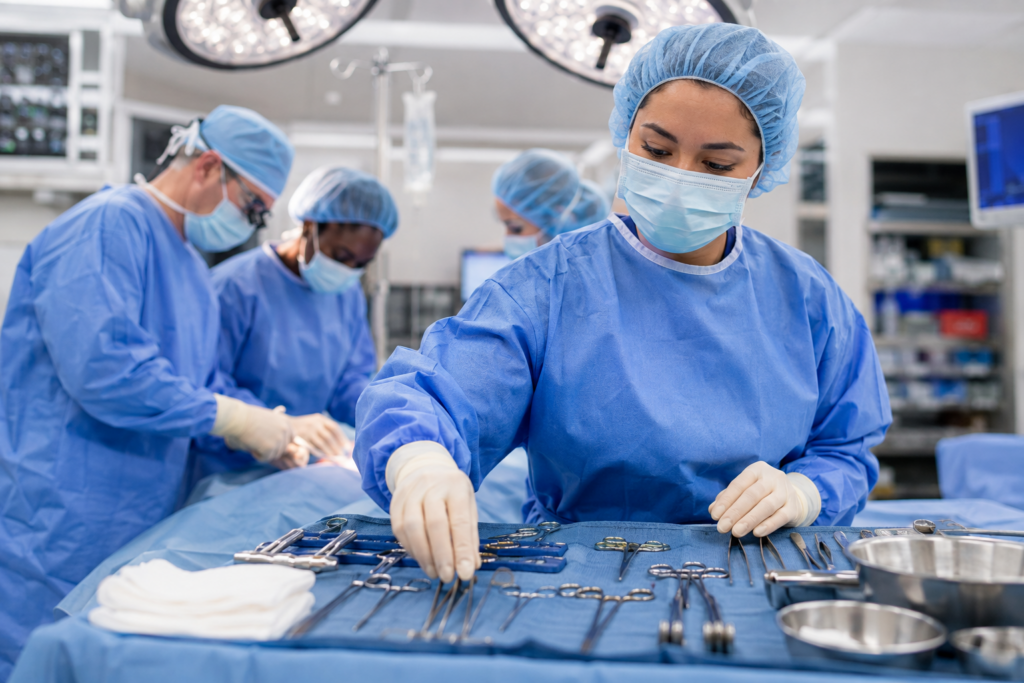
Surgery involves more than the work of a single healthcare professional. Inside the operating room, surgeons, anesthesia professionals, nurses, and surgical technologists have different responsibilities that contribute to coordinated patient care.
Communication is an important part of that teamwork. Surgical team members must understand their responsibilities, follow established procedures, and communicate clearly throughout each stage of an operation.
For someone considering a healthcare career, learning how an operating room team functions can also provide insight into the role of a surgical technologist and the training involved in entering the field.
Who Is Part of a Surgical Team?
The composition of a surgical team can vary depending on the procedure and healthcare facility. However, several professionals commonly work together before, during, and after surgery.
- Surgeons: Perform surgical procedures and make medical decisions related to the operation.
- Anesthesiologists or Nurse Anesthetists: Administer anesthesia and monitor the patient’s condition during surgical procedures.
- Circulating Nurses: Help coordinate activities in the operating room, document aspects of the procedure, and support patient care outside the sterile field.
- Surgical Technologists: Prepare operating rooms and sterile equipment, organize instruments and supplies, pass items to members of the surgical team, and help maintain the sterile field.
Each role has distinct responsibilities, making communication and coordination important throughout a surgical procedure.
What Does a Surgical Technologist Do?
Surgical technologists help prepare the operating room and provide support during surgical procedures. Their responsibilities can begin before the patient enters the operating room and continue after the procedure has ended.
Before surgery, a surgical technologist may prepare sterile supplies and instruments, assist with room setup, and help establish the sterile field.
During a procedure, surgical technologists may pass instruments and supplies to surgeons and other members of the sterile team. They also help maintain sterile technique and account for instruments and other surgical items.
After a procedure, they may assist with counting instruments and supplies, handling specimens according to established procedures, and preparing the operating room for subsequent use.
These responsibilities require attention to detail, communication, technical knowledge, and an understanding of sterile practices.
Why Training Matters in Surgical Technology
Working in an operating room requires knowledge of surgical procedures, instrumentation, anatomy, medical terminology, and infection-control practices. Career-focused education can provide opportunities to develop these skills through classroom instruction and practical training.
At Rockford Career College, the Surgical Technology Associate Degree program combines classroom instruction, lab simulations, and clinical externship experience. The program is designed to be completed in 18 months and consists of 102 quarter credit hours. Rockford Career College
Students receive training in areas including surgical techniques and procedures, anatomy and physiology, microbiology, medical terminology, pharmacology, surgical instrumentation, equipment, and sterile technique. Supervised clinical externships also provide opportunities to gain experience in healthcare settings. Rockford Career College
Surgical Technology Career Outlook
According to the U.S. Bureau of Labor Statistics, employment of surgical technologists is projected to grow 5% from 2025 to 2035.
Career opportunities and employment outcomes can vary based on location, experience, employer requirements, credentials, and individual circumstances.
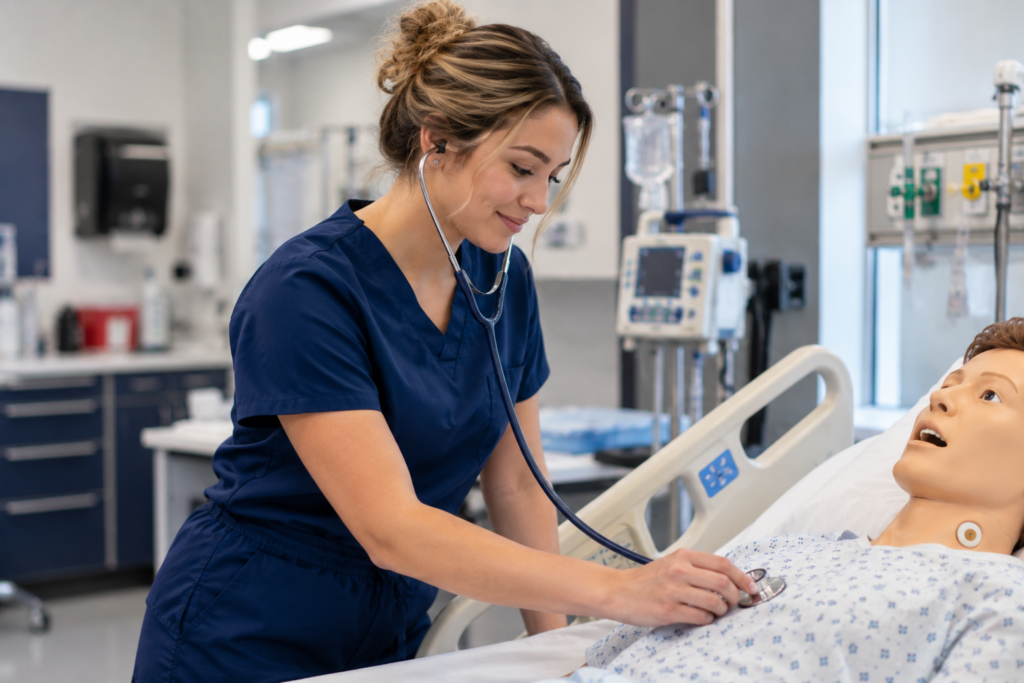
Healthcare student practicing a patient assessment with a mannequin in a clinical training labExplore Surgical Technology Training at Rockford Career College
If you are interested in healthcare and the teamwork that takes place inside an operating room, learning more about surgical technology can help you determine whether the field aligns with your educational goals.
Rockford Career College’s Surgical Technology program provides hands-on lab practice, classroom instruction, and clinical externship experience designed to help students develop skills used in surgical settings. The program is offered at the Rockford, Illinois campus in a blended format. Rockford Career College
The Surgical Technology program is also programmatically accredited by the Accrediting Bureau of Health Education Schools (ABHES). Rockford Career College
Explore the Surgical Technology Associate Degree program to learn more about the curriculum, admissions requirements, clinical training, and educational experience at Rockford Career College.
