
If you’re exploring skilled trade options, you may have come across HVAC/R and be wondering how to become an HVAC/R technician.
The heating, ventilation, air conditioning, and refrigeration field offers opportunities for those who enjoy problem-solving and hands-on work. Preparing for an HVAC/R career may involve education, hands-on training, certifications, and other requirements depending on the role and location.
What Is an HVAC/R Technician and What Do They Do?
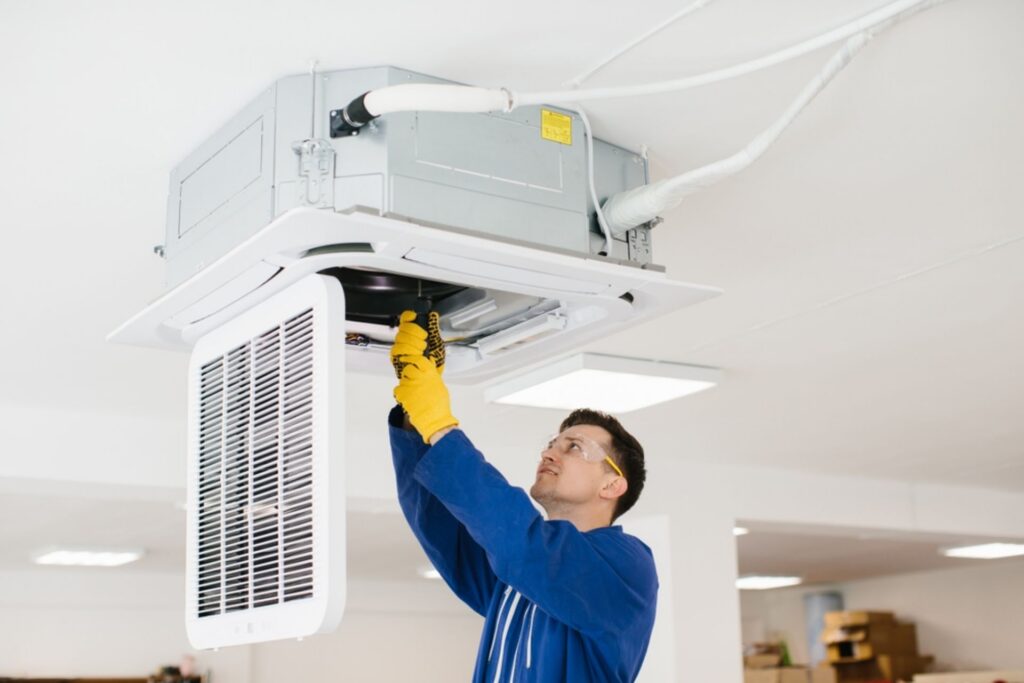
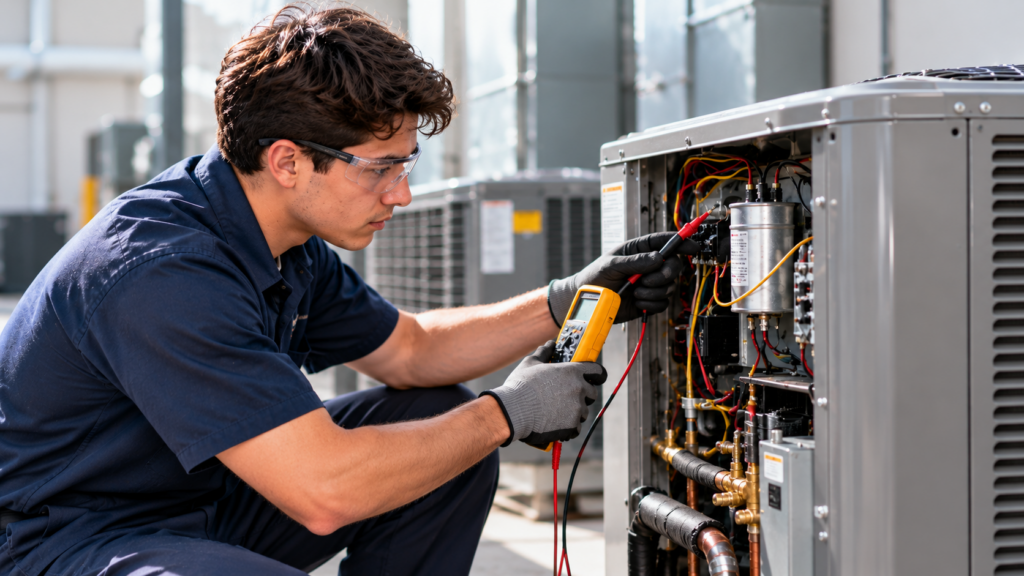
An HVACR technician is a skilled professional who works on heating, ventilation, air conditioning, and refrigeration systems. These specialists install, maintain, and repair climate control systems in homes, schools, hospitals, and commercial buildings.
HVACR technicians may perform routine maintenance, troubleshoot equipment, replace components, and inspect systems for proper operation. Because HVACR equipment can include electrical, mechanical, and refrigeration components, technicians often use a combination of technical knowledge and hands-on problem-solving skills.
How To Become an HVAC Technician: Education and Training Requirements
1. Complete Your High School Education
A high school diploma or equivalent is commonly required for postsecondary HVACR training programs. Courses in subjects such as math, physics, and basic electronics may help provide a foundation for technical training.
2. Enroll in an Accredited HVAC/R Training Program
Specialized HVACR programs can provide focused training in the skills and knowledge used in the field. For example, the HVAC/R Diploma at Rockford Career College is designed to be completed in 10 months.
The program provides hands-on training with heating, cooling, ventilation, and refrigeration systems. Students can develop skills related to installation, maintenance, repair techniques, and electrical systems relevant to HVAC/R work.
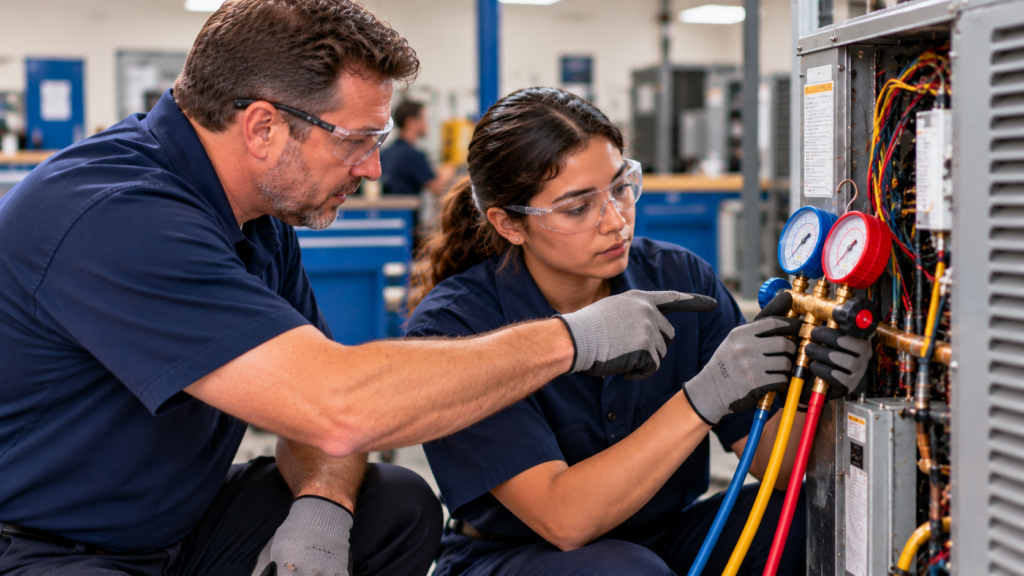
HVACR student using manifold gauges during hands-on training with an instructorHands-on training can be especially important in this field because technicians may need to diagnose problems, work with different types of equipment, and understand how individual components work together within a larger system.
3. Gain Hands-On Experience
Some individuals gain practical experience by working in entry-level HVAC/R roles or participating in apprenticeships. These experiences can provide opportunities to apply technical skills in real-world work environments and learn from experienced professionals.
Apprenticeship opportunities and their length can vary based on the employer, program, and applicable requirements. When considering your options, research the training and experience requirements for HVAC/R positions in your area.
4. Obtain Required Certifications
Technicians who maintain, service, repair, or dispose of equipment that could release regulated refrigerants must meet EPA Section 608 technician certification requirements.
Additional industry certifications, such as NATE or HVAC Excellence, may also be available depending on your career goals. Certification and licensing requirements can vary based on the work being performed and applicable state or local regulations, so it is important to research the requirements for the specific roles you are considering.
Skills That Can Help HVAC/R Technicians
Technical training is an important part of preparing for HVACR work, but technicians can also benefit from developing skills that help them diagnose problems and work effectively with others.
Problem-solving and attention to detail can be useful when inspecting and troubleshooting equipment. Communication skills may also be important because technicians can interact with customers, coworkers, contractors, and other professionals. Since HVACR work may involve different systems and work environments, being comfortable learning new equipment and procedures can also be valuable.
HVAC Technician Salary: How Much Do HVAC Techs Earn?
According to the U.S. Bureau of Labor Statistics, the median hourly wage for heating, air conditioning, and refrigeration mechanics and installers was $28.75.
Actual wages vary based on factors such as location, experience, specialization, employer, and individual circumstances.
Explore HVAC/R Training at Rockford Career College
If you enjoy hands-on work, troubleshooting, and learning how mechanical and electrical systems operate, HVACR training may be worth exploring.
Rockford Career College’s HVAC/R Diploma program provides career-focused training designed to help students develop skills related to heating, ventilation, air conditioning, and refrigeration systems.
Explore the program to learn more about the curriculum, training experience, and how Rockford Career College can support your educational goals.
