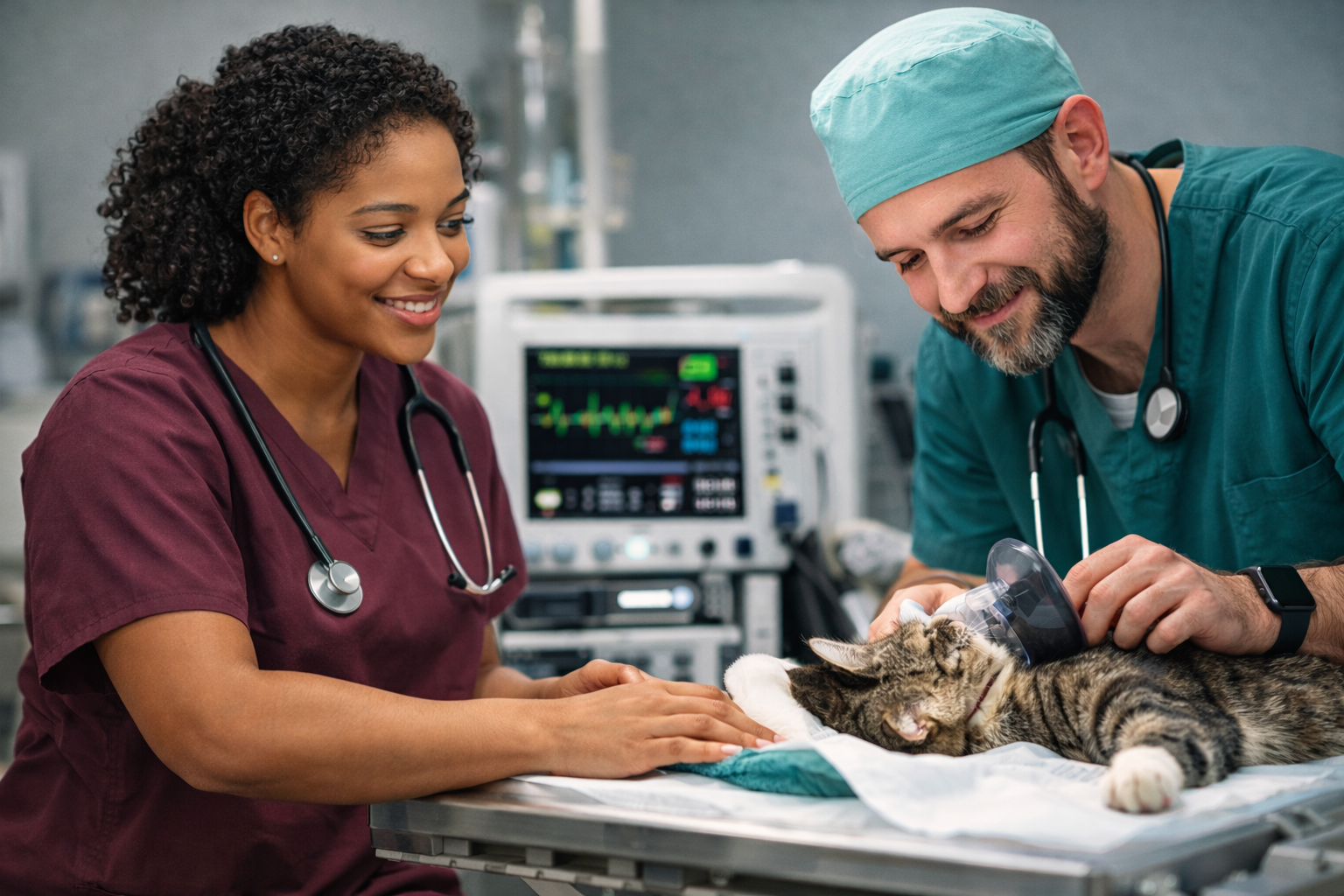
Veterinary technicians play a critical role in modern veterinary care. They work alongside veterinarians to make sure animals receive safe, effective,
and compassionate treatment. While many people picture them simply “helping the vet,” the reality is far more technical, hands-on, and demanding.
Understanding what veterinary technicians actually do helps clarify whether this career fits your skills, interests, and long-term goals.
RCC’s AVMA CVTEA-accredited Veterinary Technician AAS program enables you to develop the knowledge to succeed as a vet tech.
Veterinary technicians are trained medical professionals who support veterinarians in diagnosing, treating, and caring for animals. They do not replace veterinarians,
but they handle much of the clinical and technical work that keeps a veterinary practice running smoothly. Their role sits between animal care and medical precision.
On a typical day, veterinary technicians may be involved in many parts of an animal’s care, such as:
Much of this work happens behind the scenes, but it is essential to accurate diagnosis and treatment.
One of the most critical responsibilities of a veterinary technician is assisting during surgery. This can include:
These tasks require focus, technical training, and the ability to respond quickly if something changes.
Veterinary technicians spend a significant amount of time working directly with animals, helping to:
This part of the job blends compassion with control, as technicians keep both the patient and the team safe.
Veterinary technicians also interact with pet owners, often more than the veterinarian does. Vet techs typically:
Veterinary medicine relies on accuracy and documentation. Veterinary technicians play a key role here as well. They help maintain:
This organizational side of the role ensures continuity of care and keeps clinics operating efficiently.
Veterinary technicians are versatile and can work in various settings, such as:
Becoming a veterinary technician follows a clear, step-by-step path.
Veterinary technicians work under the supervision of licensed veterinarians and support medical care through clinical procedures, patient monitoring,
and testing. Veterinarians diagnose conditions, perform surgeries, prescribe medications, and make final medical decisions.
Yes, veterinary technicians commonly assist during surgical procedures. They prepare surgical equipment, monitor anesthesia and vital signs,
assist the veterinarian during surgery, and support the animal through recovery.
The role is primarily hands-on. Most of a veterinary technician’s day involves direct patient care, clinical procedures, and working closely with animals,
with administrative duties supporting that hands-on work.
So, what do veterinary technicians do? They assist in surgeries, run tests, care for patients, support veterinarians, and guide pet owners through treatment
and recovery. Veterinary technology is not just about loving animals. It is about doing the work that keeps them healthy and safe, every single day.
If you’re passionate about this career path and looking for the right program to start, we have designed one for you. Take the first step towards your dream today.
Talk to us now to enroll.